Find breathable durable taekwondo dobok for Training, Competition, and Studios
Source 30 options for breathable durable taekwondo dobok designed for training, competition, and martial arts studios. Compare specifications including fabric types, sizes, and customization features from verified suppliers.
Key considerations
Products List


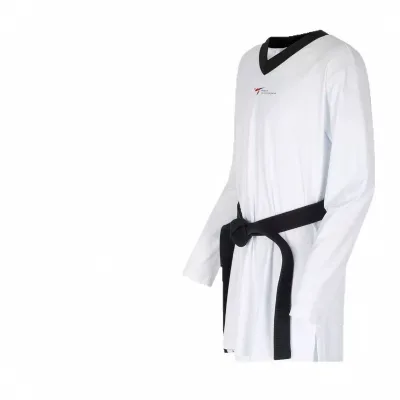
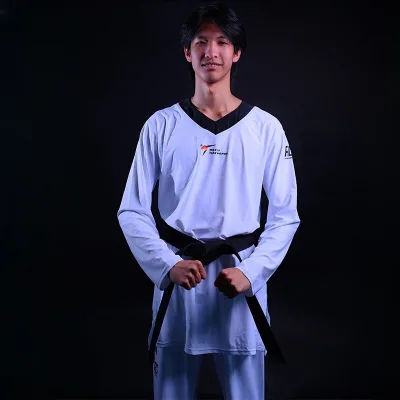
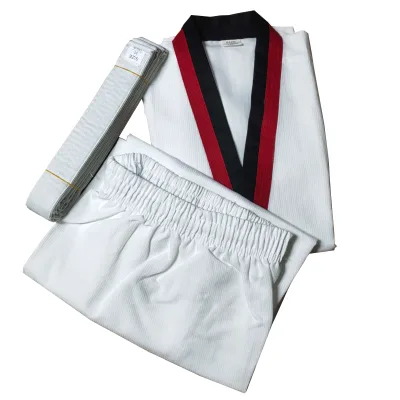
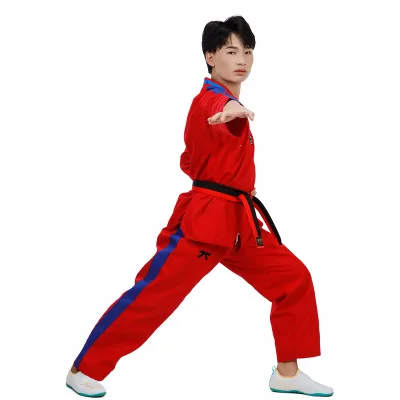
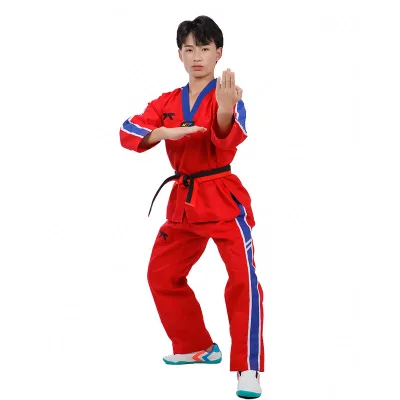


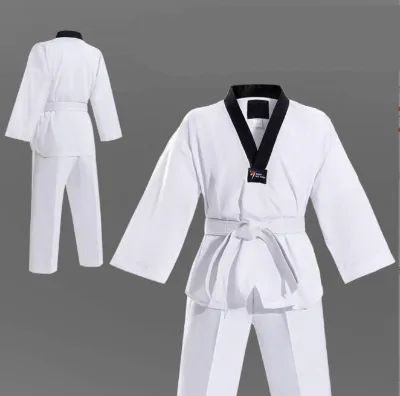
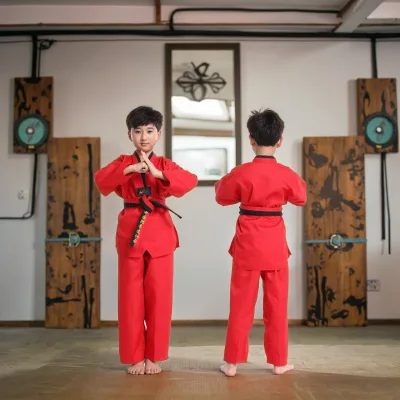
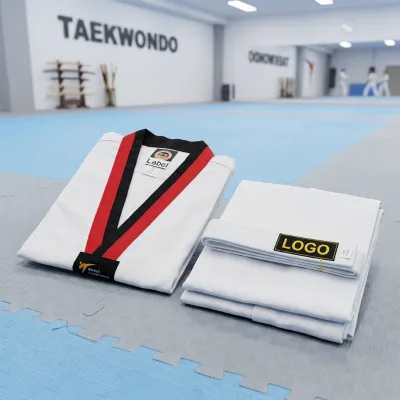
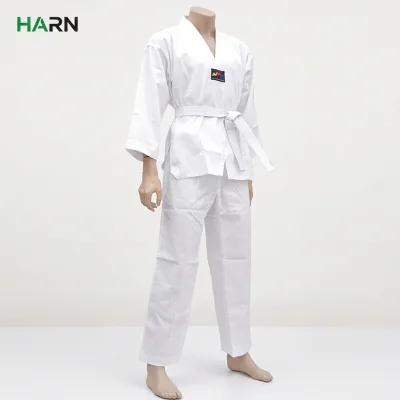
Comprehensive Sourcing Guide
Strategic Sourcing Guide for Breathable Durable Taekwondo Dobok
Understanding Technical Specifications and Material Composition
When sourcing a breathable and durable Taekwondo dobok, the primary focus must be on the material composition and fabric engineering. The supplied product data indicates a diverse range of materials available in the market, specifically highlighting Cotton, Polyester, and blends such as Polyester/Cotton or Spandex/Nylon. For a buyer prioritizing breathability and durability, the selection between these materials is critical. Cotton offers traditional comfort and absorbency, which is often preferred for training sessions, while Polyester and Spandex/Nylon blends are frequently engineered for quick-drying and moisture-wicking properties. The observed product attributes list features such as "Quick-Drying," "Moisture-Wicking," and "Breathable" as key selling points for specific models, suggesting that synthetic blends are the primary candidates for high-performance gear.
The fabric weight is another decisive technical specification. The data shows products ranging from 0.700 kg to 1 kg. A 1 kg dobok is generally considered standard for competition and rigorous training, offering a balance of durability and movement. Lighter weights, such as the 0.700 kg option, may offer superior breathability but could lack the structural integrity required for high-impact sparring. Buyers should verify the specific weight of the uniform against their intended use case. Furthermore, the construction process plays a vital role in durability. The observed "Four-Needle Six-Thread Seamless Splicing" and "Automatic Cutting" processes indicate advanced manufacturing techniques that enhance seam strength and reduce friction points, which are essential for a garment subjected to frequent grappling and kicking.
Compliance, Certification, and Standard Verification
In the B2B procurement of martial arts apparel, verifying compliance with industry standards is essential, though specific certification bodies are not explicitly detailed in the provided product facts. Buyers must understand that "standard" in this context often refers to dimensional tolerances and material specifications rather than third-party safety certifications. The supplied data lists specific product standards, such as "1kg" for weight and dimensional standards like "40cm30cm5cm" or "30CM30CM5CM," which likely refer to packaging or folded dimensions rather than the uniform itself. However, these figures highlight the importance of verifying that the supplier's internal standards align with the buyer's expectations for consistency.
Buyers should not assume that a product listing a specific standard automatically meets international safety or quality certifications unless explicitly documented. The observed origin locations, including "Liaoning" and "China," suggest a concentration of manufacturing in specific industrial hubs. While these regions are known for textile production, the lack of explicit certification data in the source material means that procurement teams must request proof of compliance from suppliers. This includes verifying that the dyes used are non-toxic and that the fabric meets flammability or chemical residue standards relevant to the buyer's target market. The absence of specific certification names in the data underscores the need for due diligence: buyers must ask for test reports regarding colorfastness, shrinkage, and tensile strength rather than relying on generic marketing claims.
Cost Drivers and Pricing Dynamics
The pricing structure for breathable and durable Taekwondo doboks is influenced by several factors, including material composition, customization complexity, and order volume. The observed listed price range in the market data spans from 4 to 30 USD. This wide variance suggests that the final cost is heavily dependent on the specific configuration of the uniform. Lower-priced items in this range may correspond to basic cotton or polyester blends with minimal customization, while the higher end likely reflects advanced features such as seamless splicing, custom logos, or premium fabric blends like Spandex/Nylon.
Minimum Order Quantity (MOQ) is a significant cost driver. The data presents a range of MOQs, from as low as 1 set to as high as 200 sets, with specific observations of 30 sets and 50 sets. Suppliers with lower MOQs may charge a premium per unit to cover setup costs for smaller batches, whereas larger orders often benefit from economies of scale. Buyers must balance their budget constraints with the need for customization. For instance, adding a "Customized Logo" or requesting specific colors like "Red, Black, White, Yellow, Blue" can impact the unit price. Additionally, the "Service Life" of 1-4 years indicates that higher durability often correlates with a higher initial investment. Buyers should calculate the cost per wear rather than just the upfront price to determine the true value of a durable dobok.
Typical Applications and Usage Scenarios
The versatility of the Taekwondo dobok is evident in the observed usage data, which lists applications for "Training," "Competition," and "Martial Arts Studios." The distinction between training and competition gear is crucial for procurement. Training uniforms, often made of cotton or cotton blends, prioritize comfort and durability against frequent washing and abrasion. In contrast, competition uniforms may require stricter adherence to color and fit standards, often utilizing lighter, more breathable synthetic fabrics to enhance performance. The data notes that some products are designed specifically "for Training, for Competition," indicating a dual-purpose capability that is highly valued by clubs and schools.
The "Style" is listed as "Unisex," and the "Age" category is "Adults," suggesting that the primary market is adult practitioners. However, the size range is extensive, with observations of "100-200cm," "90-210cm," and "110-200cm," as well as a note that "All Size Are Available, or Special Size Request." This flexibility allows suppliers to cater to various body types, which is essential for organizations serving diverse demographics. The "Collar Style" is noted as "Black V-Neck" in some instances, a specific design element that may be required for certain competition rulesets. Buyers must ensure that the selected dobok meets the specific aesthetic and functional requirements of their intended application, whether it is for daily studio use or high-stakes tournaments.
Supplier Evaluation and Origin Analysis
Evaluating suppliers requires a careful examination of their production capabilities and geographic origins. The supplied facts identify "Liaoning" and "China" as key origin points. Liaoning is a significant industrial province in China known for its textile and manufacturing infrastructure. Suppliers located in these regions often have access to advanced machinery, such as the "Automatic Cutting" processes observed in the data. However, the presence of multiple models, such as "1001," "1001-2," "KRS-WT," and "TU-01," indicates that different factories or product lines may have varying levels of quality control.
Buyers should evaluate suppliers based on their ability to handle customization requests. The data frequently mentions "Customized Logo," "Can Custom Logo as Your Require," and "Customized" as available attributes. This suggests that the supply chain is flexible enough to accommodate branding needs. However, the variation in packaging—from "Parking Bag" to "Polybag" and "1 Set/Bag, 40 Sets/Carton"—indicates that logistics capabilities vary. A reliable supplier should offer consistent packaging that protects the product during transit and aligns with the buyer's retail or distribution requirements. Additionally, the "Service Life" of 1-4 years implies that suppliers should stand behind the durability of their products. Buyers should inquire about warranty policies or return rates for defective units to gauge supplier confidence in their manufacturing processes.
Quality Control and Long-Term Procurement Considerations
Ensuring long-term value in procurement involves rigorous quality control measures and a focus on the product's lifecycle. The observed "Service Life" of 1-4 years provides a benchmark for durability expectations. To achieve the upper end of this range, buyers must verify the quality of the stitching and fabric integrity. The "Four-Needle Six-Thread Seamless Splicing" is a specific technical feature that significantly enhances durability by reducing weak points in the seams. Buyers should request samples to physically inspect these seams and test the fabric's resistance to tearing and stretching.
Packaging is another critical aspect of quality control. The data lists various packaging standards, including "Polybag" and specific carton configurations like "40 Sets/Carton." Consistent packaging ensures that the doboks arrive in pristine condition, ready for sale or distribution. Furthermore, the "Standard" dimensions provided, such as "30CM30CM5CM," should be verified to ensure that the supplier can maintain consistency across large production runs. Inconsistent sizing or packaging can lead to logistical nightmares and customer dissatisfaction.
For long-term procurement, buyers should establish a relationship with suppliers who demonstrate a commitment to continuous improvement. The availability of "Special Size Request" and "Customizable Upon Request" features suggests that suppliers are willing to adapt to changing market needs. However, buyers must ensure that these customizations do not compromise the core attributes of breathability and durability. Regular quality audits and sample testing should be part of the procurement strategy to maintain high standards. By focusing on these technical and operational details, buyers can secure a supply chain that delivers high-quality, breathable, and durable Taekwondo doboks that meet the rigorous demands of martial arts practitioners.
Comparative Analysis of Product Attributes
To facilitate a clearer understanding of the available options, the following table summarizes the key attributes observed in the product data. This comparison helps buyers identify the specific features that align with their requirements for breathability, durability, and customization.
| Attribute Category | Observed Options | Relevance to Procurement |
|---|---|---|
| Material | Cotton, Polyester, Polyester/Cotton, Spandex/Nylon | Determines breathability and moisture-wicking capabilities. |
| Weight | 0.700 Kg, 1 kg | Heavier weights (1kg) often offer better durability for competition. |
| Size Range | 90-210cm, 100-200cm, 110-200cm, Customizable | Essential for fitting diverse adult demographics. |
| Color Options | White, Black, Red, Blue, Yellow, etc. | Critical for meeting competition rules or team branding. |
| Customization | Custom Logo, Custom Size, Custom Color | Adds value for clubs and organizations requiring branding. |
| Stitching | Four-Needle Six-Thread Seamless Splicing | High durability feature reducing seam failure. |
| Origin | Liaoning, China | Indicates manufacturing hub; requires supplier verification. |
| MOQ | 1-200 sets (Specific: 30, 50 sets) | Influences initial investment and inventory risk. |
| Price Range | 4-30 USD | Reflects material quality and customization levels. |
| Service Life | 1-4 Years | Benchmark for durability expectations. |
This table highlights the variability in the market. Buyers must carefully match these attributes to their specific needs. For instance, a buyer seeking a competition-grade uniform might prioritize the 1kg weight and seamless splicing, while a training-focused buyer might opt for the cotton blend for comfort. The ability to customize logos and sizes is a universal feature across the observed products, making it a key differentiator for B2B buyers looking to build a branded product line. By systematically evaluating these factors, procurement teams can make informed decisions that balance cost, quality, and functionality.
FAQs
What materials are used for breathable durable doboks?
Materials include Cotton, Polyester, and blends like Polyester/Cotton or Spandex/Nylon. Synthetic blends often offer quick-drying and moisture-wicking features, while cotton provides traditional comfort for training sessions.
Can I get a custom logo on the uniform?
Yes, customized logos are available as a standard option. Buyers can request specific logo designs to meet their branding requirements for martial arts studios or competition teams.
Which size range is available for adult practitioners?
Sizes range from 90cm to 210cm, with options for 100-200cm and 110-200cm. Special size requests are also available to ensure a proper fit for diverse adult demographics.
How much does a breathable dobok cost per unit?
The listed price range spans from 4 to 30 USD depending on the configuration. Costs vary based on material composition, customization complexity, and the specific weight of the uniform selected.
What is the minimum order quantity for these uniforms?
MOQs vary from 1 set to 200 sets, with common thresholds at 30 or 50 sets. Lower MOQs may incur higher unit costs, while larger orders benefit from economies of scale.
How durable is the stitching on these uniforms?
Some models feature Four-Needle Six-Thread Seamless Splicing for enhanced durability. This construction reduces weak points and friction, supporting a service life of 1 to 4 years with proper care.